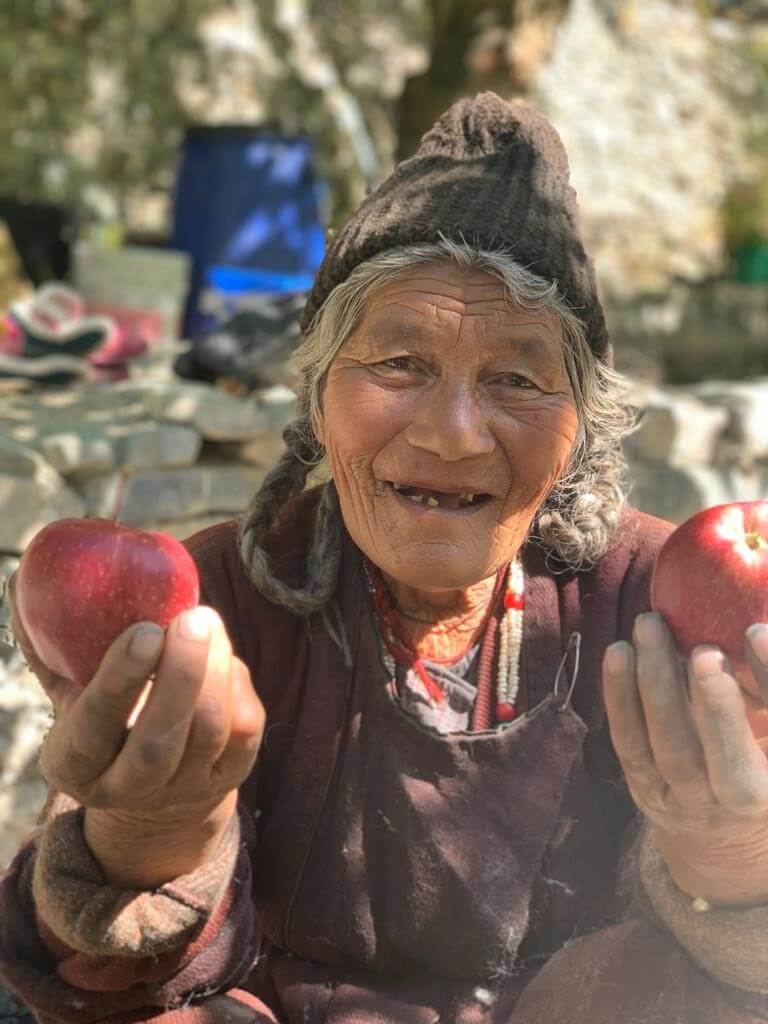
In an era where each of us is trying to revive ourselves, we chose to revive an entire community — together.
Many people ask us, “Why tree plantation?”
But the moment you walk through Neembla Forest, you understand that this is not simply about planting trees.
It is about rewilding land, restoring ecosystems, and rebuilding hope.
Before we take you there, let us pause and understand the problem this landscape once faced.
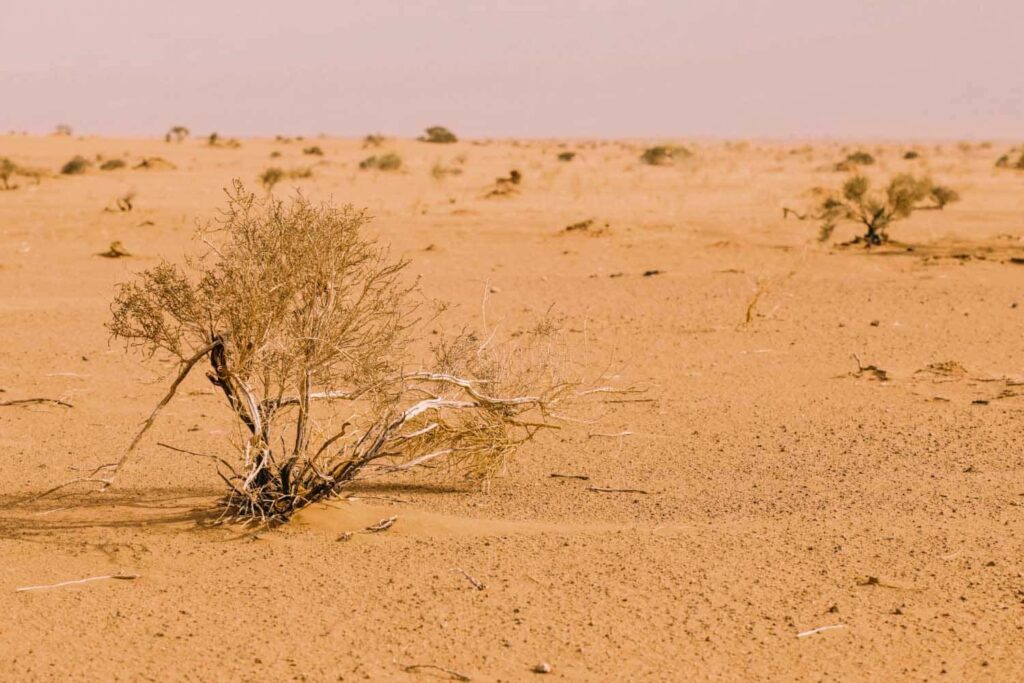
When Fertile Land Turns Into Desert
Desertification is the process by which fertile land gradually turns barren. This often happens due to prolonged droughts, deforestation, or unsustainable agricultural practices.
Neembla village was once on this very path.
Years ago, the region was surrounded by lakes and seasonal rivers, supporting both agriculture and biodiversity. But over time, the landscape began to change.
The lakes dried.
The soil cracked.
The village slowly became dependent on water tankers during peak summers.
What was once fertile land was gradually turning into a desert.
A Vision to Transform the Landscape
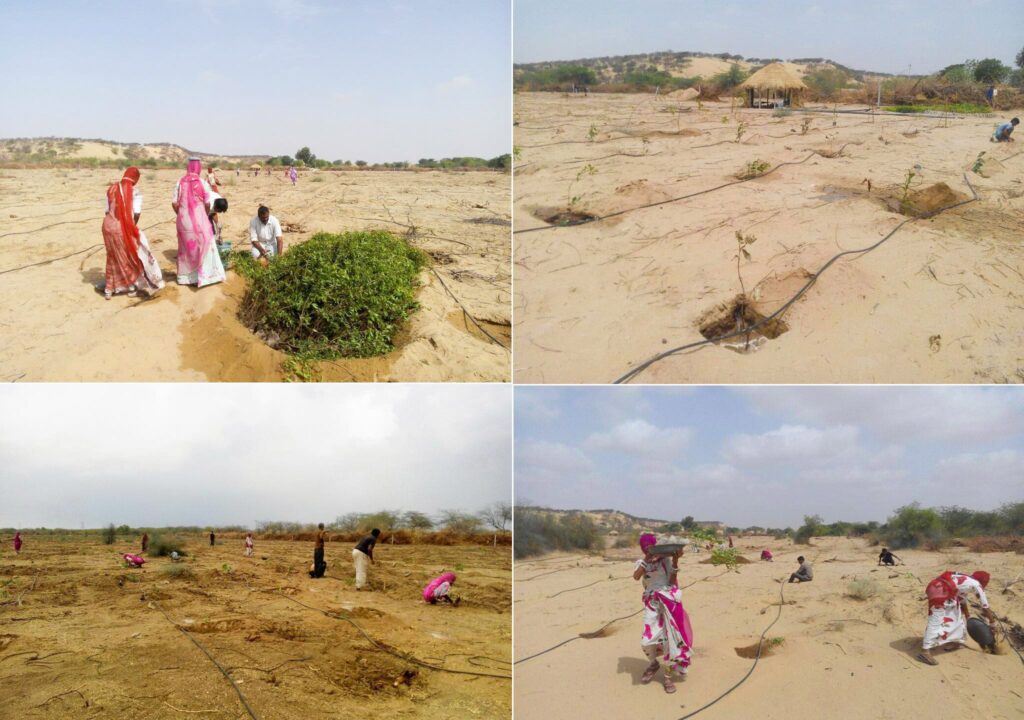
Nearly a decade ago, SankalpTaru Foundation adopted this land with a single vision:
To transform it into a landscape of hope and possibilities.
The journey, however, was anything but easy.
Water scarcity made survival difficult for young saplings.
Termite attacks threatened the plantations.
Intense heat waves pushed both the ecosystem and the team to their limits.
Yet resilience proved stronger than every obstacle.
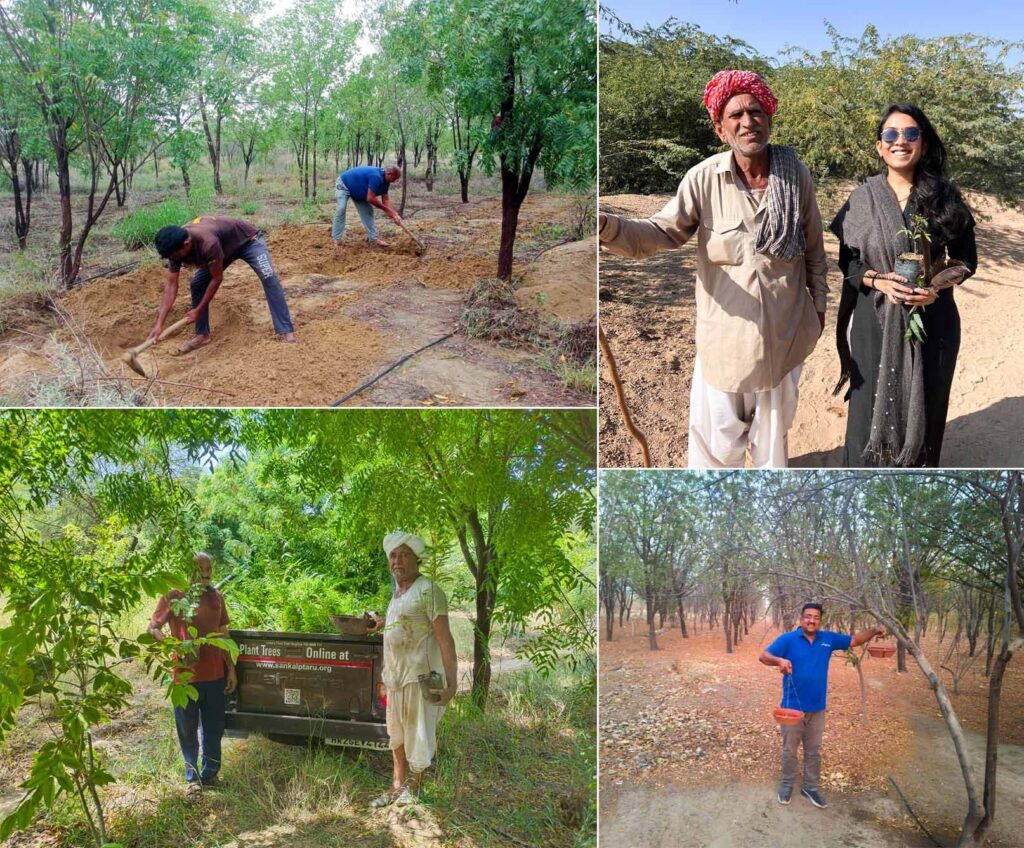
Year after year, trees were planted, nurtured, and protected.
And slowly, something remarkable began to happen.
An Oasis in the Middle of Sand
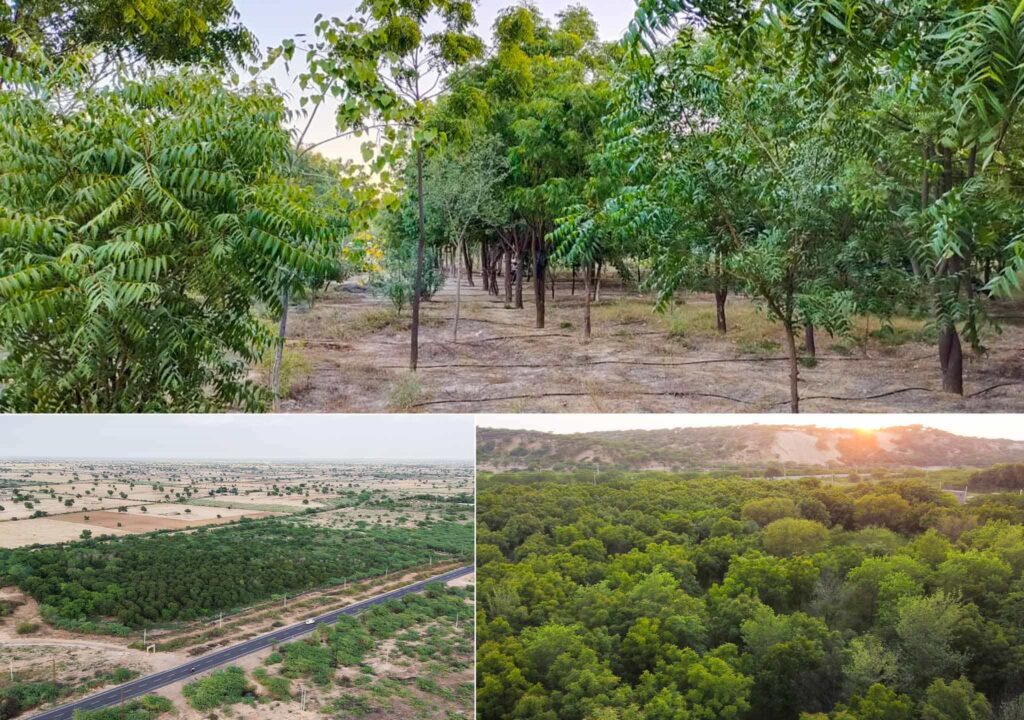
Today, Neembla Forest stands tall, dense, and vibrant, forming a striking contrast to the surrounding landscape.
As you drive past nearby villages swallowed by sand dunes, something unexpected appears on the horizon.
An oasis.
A calm forest.
Cooler breezes begin to replace the dry desert air.
Dense shaded canopies stretch above.
Moist soil replaces cracked ground.
And suddenly, the unmistakable sound of birds fills the air.
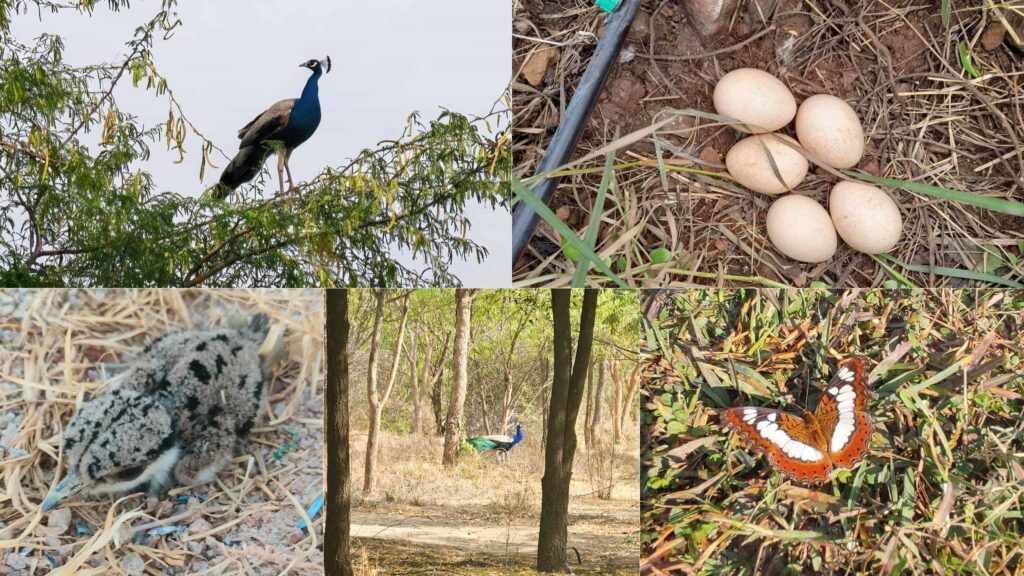
A Forest That Birds Now Call Home
For the birds that visit this forest, it is no longer a resting stop — it is home.
Flashes of color appear among the trees.
Peacocks spread their magnificent feathers.
Sparrows chirp energetically among branches.
Owls perch quietly in shaded hollows.
Eagles soar high above the canopy.
Even nilgais sprint playfully, weaving through the trees before disappearing into the greenery.
Life has returned — in vibrant abundance.
Reviving Water, Reviving Life
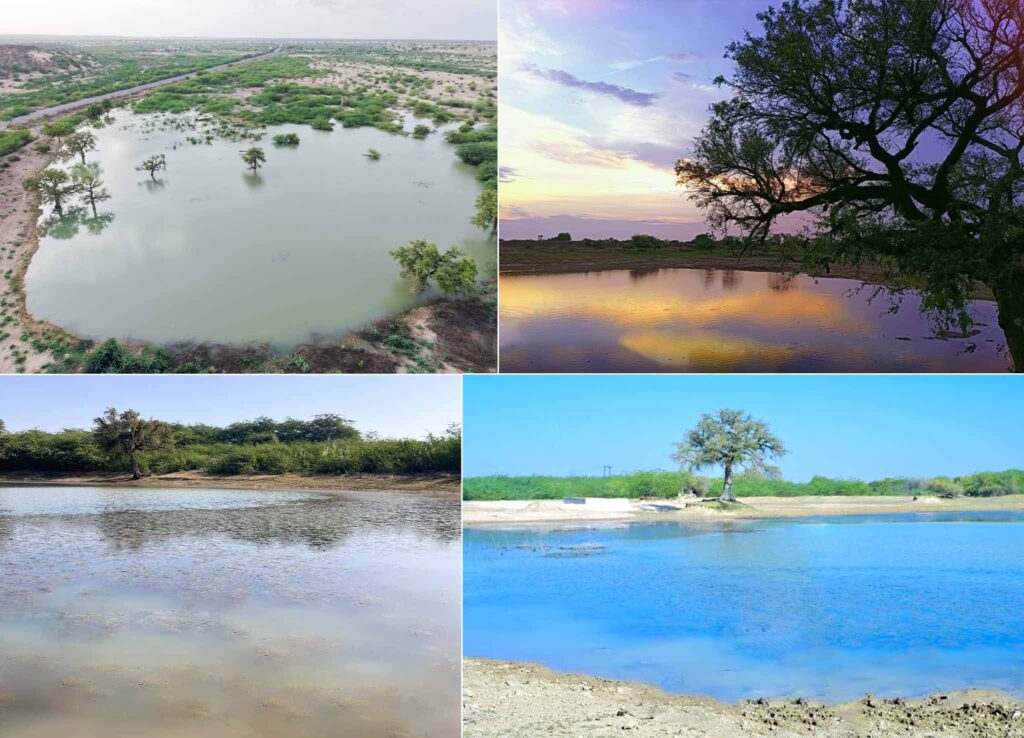
The transformation did not stop with trees.
A nearby pond was revived as part of the restoration effort. Today, it retains water throughout the year.
This simple intervention has created a thriving micro-ecosystem.
Native plants flourish along its banks.
Animals gather to drink.
Migratory birds now find a seasonal refuge here.
What was once a dry patch of land has become a lifeline for biodiversity.
Soil That Tells a Story
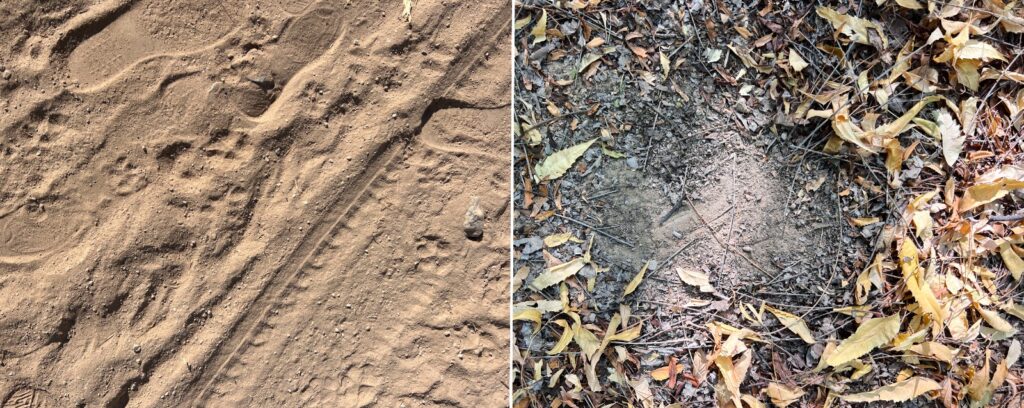
The moment you step into the forest, the ground itself tells a story.
Years of fallen leaves and organic matter have gradually built nutrient-rich soil — something that once seemed impossible in a desertifying region.
Look above, and you feel the difference.
Under the canopy, the temperature drops noticeably.
The air feels cooler and softer.
Growth here was never rushed.
It was slow, steady, and deeply rooted.
The Small Details That Reveal a Healthy Ecosystem
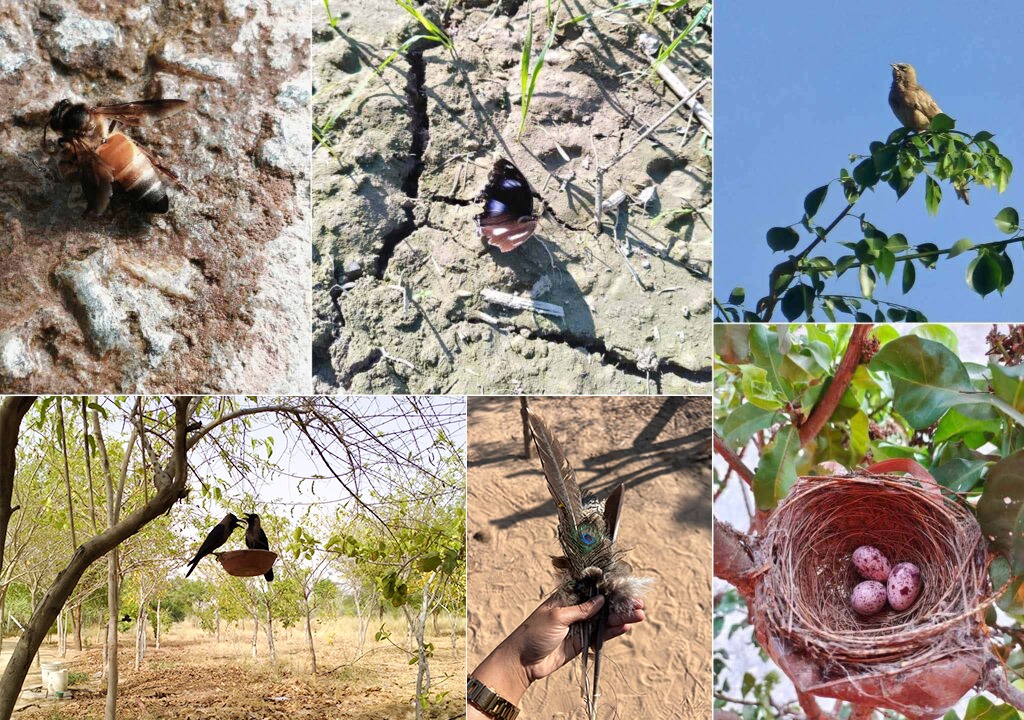
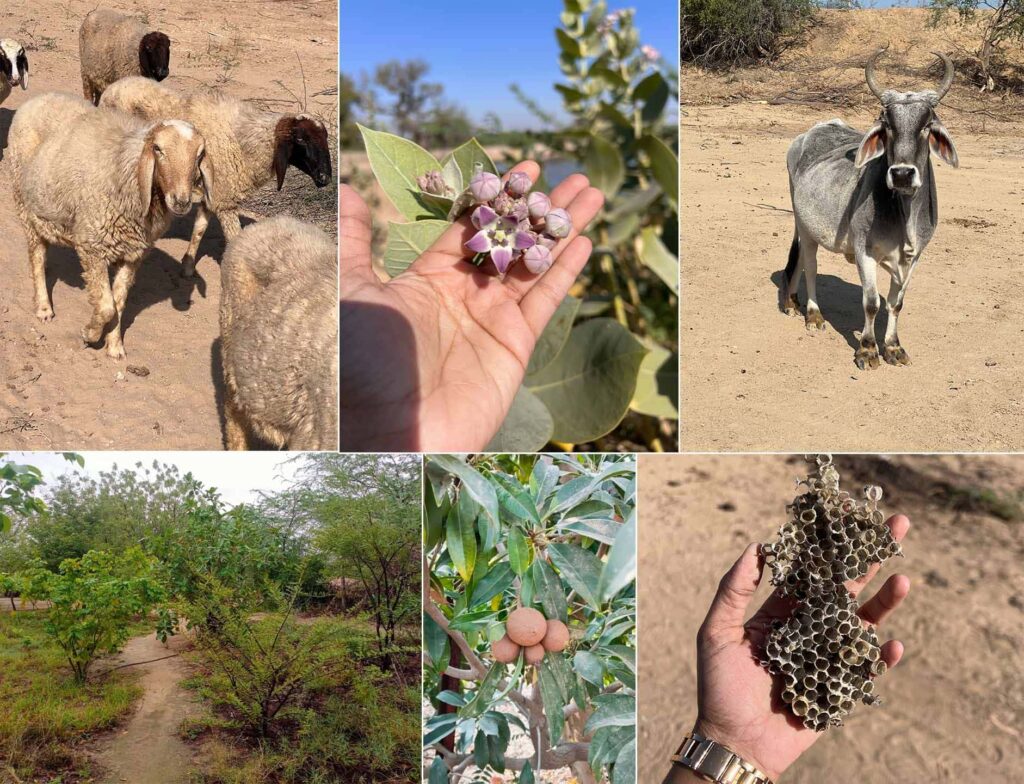
Walk deeper into the forest, and you begin to notice small but powerful signs of life.
Delicate feathers scattered on the forest floor.
Intricate spider webs woven between branches.
Tiny mud nests carefully crafted by insects.
These details matter.
Spider webs require fibers and moisture.
Mud nests require soil and water.
In regions battling desertification, even these basic elements become scarce.
Yet here, both have returned — naturally — through the presence of trees.
How Trees Restore Entire Ecosystems
Trees do far more than grow.
Their canopies cool harsh summers.
Their roots help water seep deeper into the ground, improving groundwater levels.
Their presence moderates the local microclimate.
Gradually, life returns.
Plants.
Birds.
Animals.
Insects.
Each playing its role in rebuilding a balanced ecosystem.
A Forest That Serves the Community
Today, Neembla Forest is not just ecological infrastructure.
It is community infrastructure.
Villagers graze their cattle here.
Children walk through shaded paths and play among the trees.
Families gather under the canopy to rest and connect with nature.
The forest has become a recreational, emotional, and ecological space for the community.
When Awareness Meets Action
Neembla stands as a living example of what becomes possible when awareness transforms into action.
Flora.
Fauna.
Humans.
Co-existing safely, sustainably, and beautifully.
And that is why we plant trees.