The pit was ready. A shallow hole in dry, tired land.
A child stood beside it, holding a sapling no taller than her arm. Someone guided her hands as she placed it into the soil. A little water followed. A photograph was taken.
“Another tree planted.”
But if you listen closely, the earth would say— “Not yet….this is only the beginning.”
This Is Where the Real Story Begins
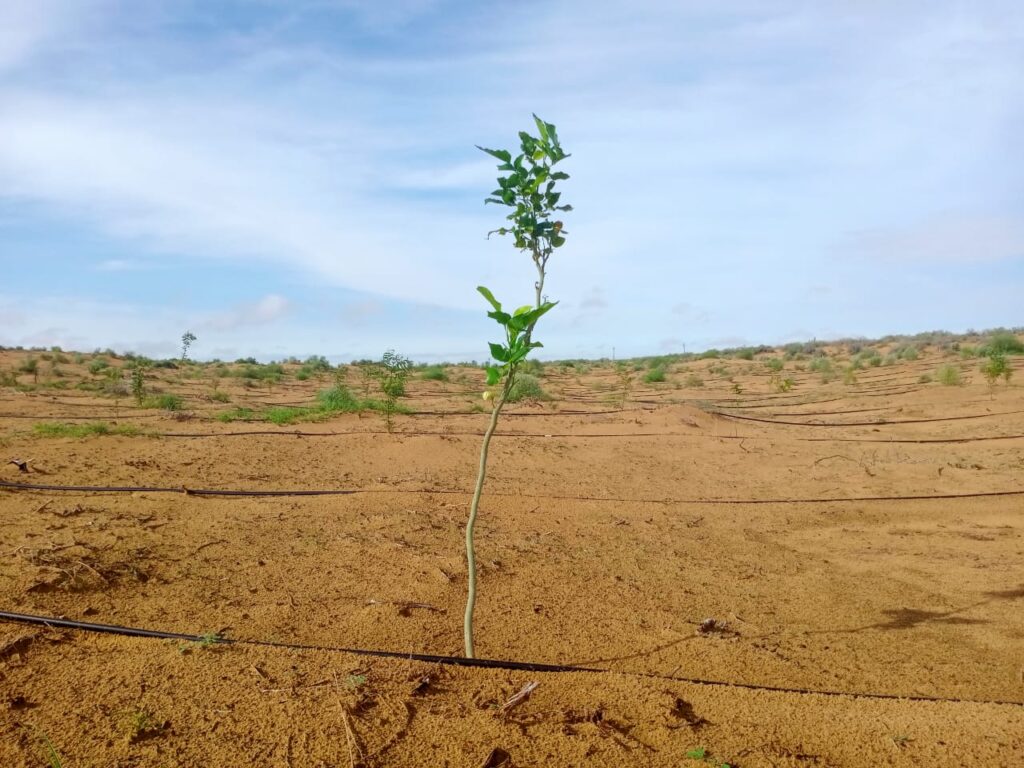
Planting a sapling is not success. It is exposure.
The moment a sapling touches the ground, it enters a world of uncertainty. The soil may be compacted, lifeless, or nutrient-deprived. The sunlight may be too harsh for the tiny sapling. Water flow can also be uncertain.
Scientifically, this is the phase of transplant shock—a critical period where survival is not guaranteed.
Roots must:
- Re-establish contact with the soil
- Absorb water efficiently
- Form symbiotic relationships with beneficial soil microbes
Without this, the sapling doesn’t grow. It struggles. It stalls. It dies.
And this is the uncomfortable truth, many do not survive.
Why Most Plantations Fail Silently
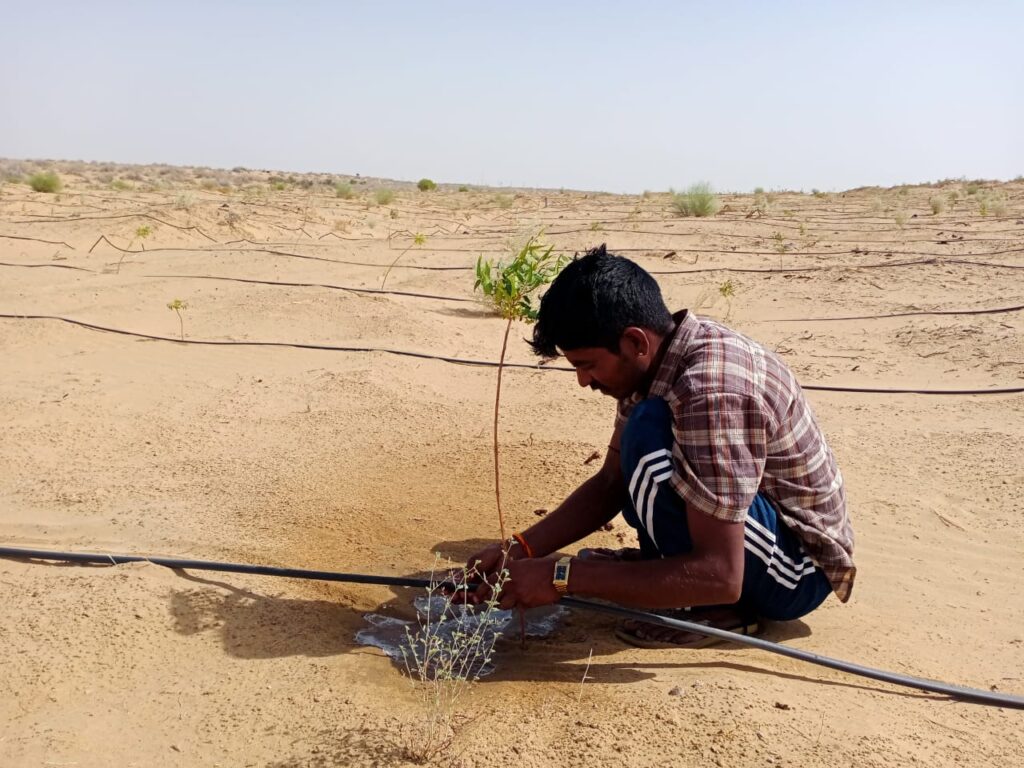
Plantation is an event.
Restoration is a process.
Across landscapes, millions of saplings are planted every year. But without aftercare, ecological understanding, and system thinking, survival rates can drop drastically.
Because planting ignores a simple scientific reality:
A tree cannot grow in isolation, it thrives within a living system.
It needs:
- Living soil
- Microbial activity
- Moisture balance
- Ecological support systems
A sapling planted in degraded land is like a seed thrown into emptiness.
The Turning Point: When Soil Comes Alive
Now imagine something different. The same sapling. The same land.
But this time, the soil is mulched, organic matter is added and moisture is retained.
Below the surface, something extraordinary begins. Microorganisms wake up.
Bacteria start decomposing organic matter. Fungi extend thread-like networks through the soil—mycorrhizae, connecting roots and transporting nutrients. Earthworms tunnel through the ground, increasing aeration and water infiltration.
This is not visible to the eye, but it is everything.
Because soil is not just a medium, it is a living system.
And the moment it comes alive, the story changes.
When One Plant Becomes Many Lives
As the sapling stabilizes, it begins to grow, leaves expand their size and flowers emerge.
And then, the first visitor arrives.
A bee.
Then another. A butterfly. A beetle. A spider.
This is not coincidence; it is called ecology in motion.
Through pollination, insects enable reproduction. Through food webs, they create balance. Through interaction, they build resilience.
The sapling is no longer just surviving. It is supporting life.
From Tree to System
Years pass.
The sapling is now a tree. Its canopy casts shade, lowering ground temperature. Leaf litter accumulates, enriching the soil with organic carbon. Water begins to infiltrate deeper rather than running off.
New plants emerge in its shade. Birds arrive. Small mammals follow.
What was once barren land is now a functioning ecosystem.
This is the science of ecological restoration:
- Improved soil structure and fertility
- Increased biodiversity
- Enhanced water retention
- Greater system stability and resilience
The land is no longer dependent on human intervention.
It is regenerating itself.
The Difference That Changes Everything
Plantation asks:
“How many trees did we plant?”
Restoration asks:
“How many survived, and what did they become?”
Plantation counts numbers.
Restoration builds living systems.
One creates moments.
The other creates futures.
The Story We Need to Tell Differently
That photograph from the beginning? It should not end there.
Because a sapling is not a symbol of completion. It is a test of commitment.
Will it be watered? Will the soil be nurtured? Will biodiversity be allowed to return? Or will it become another forgotten statistic?
Final Thought
A sapling does not become a tree simply because it was planted. It becomes a tree because the system around it was restored.
And when that happens—
It does more than grow.
It cools the land.
It feeds the soil.
It supports life.
It changes the future.
So, the next time you plant a sapling, ask yourself:
Are you planting a tree, or beginning a story?